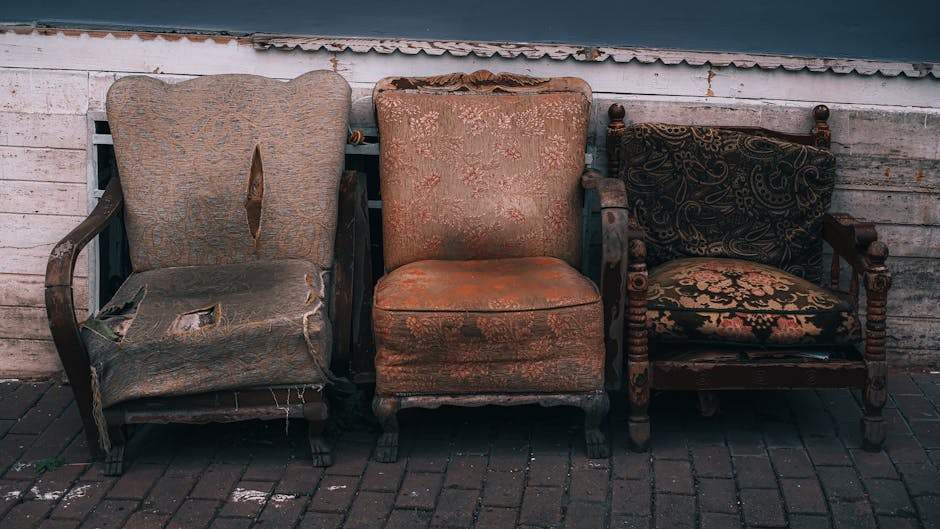
Kingston Council upholstery disposal rules for cleaners
Posted on 07/07/2026
Kingston Council upholstery disposal rules for cleaners: a practical local guide
If you clean sofas, chairs, headboards, or other upholstered items in Kingston, disposal can be the awkward bit nobody enjoys talking about. The fabric may look harmless enough, but once it's been soaked, stripped, contaminated, or simply replaced after a job, you still need to know what happens next. That is where Kingston Council upholstery disposal rules for cleaners come in.
This guide explains the sensible, real-world approach: what counts as upholstery waste, when it can go to the tip, when it should not, what cleaners should check before removing anything, and how to avoid the sort of messy mistake that turns a tidy job into a complaint. Let's face it, nobody wants a lovely fresh clean to end with a van full of the wrong rubbish.
We'll keep this grounded and practical, with a bit of local Kingston context and a clear eye on UK best practice. If you also want to understand the broader cleaning picture, our services overview and upholstery cleaning in Kingston upon Thames pages may help put the disposal side into context.

Why Kingston Council upholstery disposal rules for cleaners Matters
Upholstery disposal might sound like a background admin task, but it affects safety, cost, customer trust, and whether a job is actually finished properly. Cleaners deal with more than dust and stains. A damp armchair, a broken sofa bed, or a fabric dining chair removed from a rental property can create a disposal issue that needs judgement, not guesswork.
The main reason these rules matter is simple: upholstered furniture is bulky, hard to transport, and sometimes unsuitable for standard household waste services. If a cleaner dumps it where it shouldn't go, or leaves it for the client without explaining the options, the result can be a wasted trip, an unhappy customer, or a breach of waste handling expectations. No one needs that at 7:30 on a wet Wednesday morning.
There is also a hygiene angle. Upholstery can carry pet hair, moisture, mould spots, pests, body fluids, or strong cleaning residues. In some cases, the item is no longer a normal "old sofa" but a contaminated waste item that needs more careful handling. That is where a cleaner's role becomes part technical, part practical common sense.
For cleaners working across homes, landlords, offices, and move-out jobs, being clear on disposal expectations also helps with quoting. If disposal is separate from cleaning, say so early. If the customer expects a sofa to disappear after a deep clean, make sure that is actually arranged. It sounds obvious, but in real life this is exactly where confusion creeps in.
Expert summary: upholstery disposal is not just a rubbish issue. For cleaners, it sits at the crossroads of safety, customer communication, transport planning, and responsible waste handling.
How Kingston Council upholstery disposal rules for cleaners Works
In practical terms, cleaners need to think about three questions before moving an upholstered item: what is it, what condition is it in, and where is it going next? That simple three-part check prevents most problems.
First, identify the item. A fabric armchair, padded headboard, office visitor chair, sofa, recliner, or footstool may all be treated differently depending on size, condition, and contamination. Second, assess whether it's cleanable, recyclable, reusable, or only suitable for disposal. Third, decide whether it can be taken through normal local waste routes, booked for collection, dropped at a permitted waste site, or handed to a specialist service.
For cleaners in Kingston, the important point is that "it's just one sofa" is never the full story. The council's waste approach, the building's access, parking restrictions, and the client's expectations all shape the final choice. A third-floor flat in a block off the high street is very different from a ground-floor house in a quieter street. Small detail, big difference.
Most of the time, a cleaner won't be the final waste operator. They will prepare the item for disposal, advise the customer, and make sure the item is handled by the correct route. If a client is already planning a larger refresh, it may tie in with deep cleaning services in Kingston or even spring cleaning support, where waste planning and decluttering often go hand in hand.
One thing to remember: council guidance can change, and collection rules may depend on whether the item is from a household, a managed property, or a business setting. So the safest approach is to treat the council's rules as the baseline and confirm the exact disposal path before anything leaves the property.
Key Benefits and Practical Advantages
Getting upholstery disposal right gives you more than compliance. It makes the whole cleaning operation smoother, and that matters when you're juggling access windows, customers, and the occasional surprise sofa in a hallway.
- Fewer delays: you avoid last-minute scrambles to find a disposal route.
- Cleaner handovers: customers know what will be removed, what will stay, and what happens next.
- Lower risk: proper handling reduces spills, cuts, contamination, and lifting injuries.
- Better quotes: disposal can be priced accurately instead of being treated as an afterthought.
- More professional service: clients notice when cleaners explain the process clearly.
There's also a quieter benefit that experienced cleaners appreciate: less friction. If the item is bulky and awkward, but the removal plan is agreed in advance, the job feels calm. No arguing in the doorway. No "I thought you were taking it away." Just a proper plan.
For landlords and tenants, clear disposal handling can support end-of-tenancy standards too. If you're working alongside a final property clean, the removal of old furniture can make the space feel ready for inspection much faster. Our end of tenancy cleaning Kingston upon Thames page covers that broader workflow.
Who This Is For and When It Makes Sense
This topic matters to a few different people, and each group has a slightly different problem to solve.
Cleaners and cleaning teams
If you are carrying out domestic or commercial cleaning, you need to know when upholstery is part of the clean and when it has become waste. A fresh stain is one thing. A waterlogged armchair with failed padding is another. Knowing the difference saves time and protects your reputation.
Landlords and letting agents
In managed properties, furniture disposal often happens between tenancies or during partial refurbishments. The cleaner may be the first person to spot that an item is beyond saving. A quick call can prevent the wrong item being left behind in a rushed checkout.
Homeowners
Sometimes the customer assumes the cleaner can "just take it away." Sometimes they can't, sometimes they shouldn't, and sometimes the item needs specialist disposal. Clear expectations avoid frustration. That's the boring truth, but it matters.
Offices and commercial premises
Office chairs, waiting-room seating, and reception furniture can be upholstered too. When these are replaced, disposal must be handled with care. If you're managing a business premises, our office cleaning Kingston upon Thames page may be useful for understanding related upkeep work.
When it makes sense to plan disposal early
If the item is water damaged, mouldy, vermin-affected, broken beyond repair, or structurally unsafe, start disposal planning early. Don't wait until the van door is already open. That's when minor admin turns into a small circus.
Step-by-Step Guidance
If you want a simple way to handle upholstery disposal well, use this process.
- Inspect the item carefully. Look at the fabric, frame, filling, size, and condition. Check for dampness, mould, pests, broken springs, or chemical contamination.
- Decide whether it is waste or salvageable. If the item can be cleaned and returned to use, it should stay in the cleaning workflow. If not, treat it as disposal.
- Confirm who owns the item. Never remove a sofa, chair, or mattress-adjacent upholstered item without the client's clear permission. This sounds basic, but people do forget.
- Check the disposal route. Depending on the item and situation, this might involve council-approved bulky waste handling, a waste transfer route, or a licensed removal service.
- Separate recyclable parts if appropriate. Some items contain wood, metal, foam, or textiles that may need sorting before disposal.
- Protect your team. Use gloves, lifting techniques, and safe loading methods. One awkward lift can ruin a whole day.
- Document what was removed. For business customers and landlords, a simple note or photo record can prevent disputes later.
- Finish with a clear handover. Tell the customer what was removed, where it is going, and whether anything else is needed.
If the item is connected to an accident such as flooding, act a bit faster. Damp upholstery can deteriorate surprisingly quickly, and you may need a response that combines cleaning, containment, and disposal planning. Our flood cleanup and emergency cleaning guide covers that kind of fast-moving scenario.
A helpful rule of thumb: if you wouldn't want it carried through your own hallway wet and dripping, it probably needs a proper disposal plan.
Expert Tips for Better Results
Here are the tips that make the difference between a tidy, professional job and a slightly chaotic one.
- Ask about disposal at quote stage. Customers rarely forget to ask "how much?" but they often forget to ask "what happens to the old item?"
- Use condition-based language. Say "beyond cleaning" or "fit for removal" rather than vague terms like "bad state." It keeps conversations clearer.
- Keep a contamination checklist. Pet damage, smoke odour, moisture ingress, pests, and bodily fluid contamination can all change how you should handle the item.
- Plan for access before lifting. Measure stairs, doorways, and tight corners. A sofa that fits in a living room may still be a nightmare on the stairwell.
- Don't assume every upholstered item is disposable in the same way. A small dining chair and a full sofa are not the same operational task.
- Take care with parking and timing. In busy parts of Kingston, a simple disposal run can be delayed by loading restrictions or access issues.
- Keep clients in the loop. A quick message can prevent confusion: "Item removed, awaiting disposal route" is often enough.
And yes, sometimes the best tip is simply this: slow down for ten seconds before you lift. Not glamorous, but incredibly useful.
Common Mistakes to Avoid
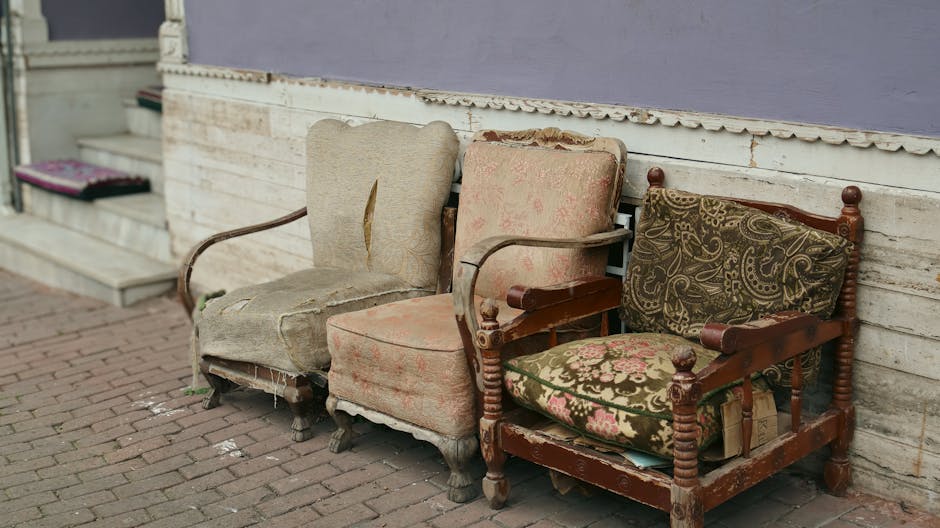
Most disposal errors come from assumption. People assume the council will take anything, assume the cleaner can remove anything, or assume a damaged sofa is still just "rubbish" without any special handling. That's where the headaches start.
- Leaving disposal until the end of the job. You lose control of timing and costs.
- Removing items without written or verbal confirmation. That can become a dispute very quickly.
- Mixing clean waste with contaminated waste. This creates handling issues and can make disposal harder.
- Underestimating weight and bulk. Upholstered items are awkward, and awkward often means injury if rushed.
- Not checking whether the item can be recycled or needs special treatment. Many items are composites, not simple one-material waste.
- Forgetting the customer's building rules. Flats, managed blocks, and offices often have their own waste or access restrictions.
One tiny but costly mistake is not clarifying who pays for disposal. A cleaner may think it's separate. The client may think it's included. Nobody is lying, but both can end up annoyed. A two-minute explanation saves the day.
Tools, Resources and Recommendations
You do not need a van full of specialist kit to manage upholstery disposal properly, but you do need the right basics.
| Tool or resource | Why it helps | Best use case |
|---|---|---|
| Heavy-duty gloves | Protects hands from sharp frames, staples, and dirt | Any removal or handling job |
| Furniture straps or moving blankets | Makes lifting and carrying safer | Stairs, hallways, and van loading |
| Plastic sheeting or covers | Reduces mess from damp or dirty upholstery | Water damage or heavily soiled items |
| Camera phone | Creates a record of item condition and removal | Landlord, commercial, or dispute-prone jobs |
| Job notes / disposal checklist | Keeps the team aligned | Multi-item cleans and end-of-tenancy work |
As a recommendation, keep one standard disposal script for your team. Something simple, not over-rehearsed: "We can remove this if you'd like, but we'll need to confirm the disposal route and any charge before it leaves the property." Clean, calm, no drama.
If the broader job is a one-off clean after a move, renovation, or clear-out, the disposal discussion often fits naturally with one-off cleaning in Kingston upon Thames. That's usually the right moment to reset a room properly.
Law, Compliance, Standards, or Best Practice
This is the part where caution matters. Cleaners handling upholstery disposal should work to current UK waste handling expectations and, where relevant, follow local council guidance for bulky waste and household waste presentation. The exact route can vary depending on whether the item comes from a home or a business, and whether it is ordinary bulky waste or contaminated waste.
Best practice usually means:
- only moving items with the owner's permission;
- not fly-tipping or abandoning waste outside permitted channels;
- keeping clear records for business or landlord jobs;
- separating potentially contaminated items from ordinary waste;
- using safe lifting and transport methods;
- checking whether a licensed waste carrier is needed for the job.
For commercial premises, there may be stronger expectations around duty of care, waste transfer documentation, and segregation. In plain English, that means you should know where the waste came from, where it went, and who handled it. Nothing exotic. Just sensible accountability.
Health and safety also matters. Wet upholstery can be heavy, slippery, and awkward. Foam dust, mould spores, and hidden fixings can all create avoidable risks. If you manage teams, link disposal practice to your wider processes through health and safety policy guidance and insurance and safety information.
One small but important point: if a piece looks contaminated in a way that goes beyond normal household waste, do not improvise. Stop, assess, and use the appropriate route. That bit of patience can save a lot of trouble later.
Options, Methods, or Comparison Table
Different jobs call for different disposal methods. There is no single "best" option every time, which is annoying but true.
| Method | Best for | Pros | Watch-outs |
|---|---|---|---|
| Keep and clean | Items still structurally sound | Lowest waste, best value for the client | Not suitable if the frame or filling has failed |
| Customer arranges disposal | Jobs where the cleaner is not contracted to remove waste | Simple for the cleaner | Requires very clear communication |
| Bulky waste collection route | Single large upholstered items from homes | Convenient when available | May involve booking rules or wait times |
| Licensed removal service | Multiple items or business waste | Better for larger or recurring jobs | Usually costs more |
| Reuse/donation assessment | Lightly used items in good condition | More sustainable, less waste | Only works if the item is genuinely fit for reuse |
If you're deciding between disposal and deep cleaning, ask one question: will the item still be useful, safe, and presentable after the clean? If the answer is no, don't overwork it. Sometimes the cleanest choice is to remove the item entirely.
Case Study or Real-World Example
A common Kingston scenario goes like this. A cleaner arrives at a first-floor flat after a tenant move-out. The client wants the living room cleared, the sofa is stained, the armchair smells damp, and the hallway is narrow. On inspection, the sofa frame is intact but the fabric is badly marked, while the chair has clear water damage and a musty smell. The client assumed both items would simply be "taken care of."
Here's what a good cleaner does. They explain that the sofa might still be assessable for cleaning, but the chair is likely beyond normal restoration. They separate the decision-making: one item is quoted as an upholstery clean, the other as a disposal item. They check access, confirm ownership, and note that removal should happen only once the client approves the cost and route.
The result? No rushed decisions, no awkward carrying halfway down the stairs only to stop and rethink, and no surprise charges. The client gets clarity. The cleaner gets a smooth job. The room ends the day quieter, fresher, and ready for the next stage. Simple really, though it rarely feels simple at the time.
If you want more local cleaning context from Kingston, our posts on upholstery cleaning tips for Canbury Gardens homes and common stains and how Kingston cleaners remove them fast are worth a look too.
Practical Checklist
Use this checklist before any upholstered item leaves a property.
- Have I confirmed the item belongs to the client or property owner?
- Is the item genuinely beyond cleaning, or should it be restored instead?
- Have I checked for damp, mould, pests, or contamination?
- Has the client approved removal in advance?
- Do I know whether disposal is included or charged separately?
- Is the access route safe for lifting and carrying?
- Have I considered parking, stairs, and building rules?
- Do I need protective kit, straps, or covers?
- Is this waste suitable for a standard route, or does it need a different process?
- Have I made a note or taken a photo for records?
And if the job is part of a full property refresh, consider whether a broader clean is also needed. Our domestic cleaning Kingston upon Thames and house cleaning Kingston upon Thames services are useful reference points for that kind of ongoing upkeep.
Get a free quote today and see how much you can save.
Conclusion
Kingston Council upholstery disposal rules for cleaners are really about doing things properly: checking the item, confirming permission, choosing the right disposal path, and keeping the client informed. Once you build that habit, the process becomes much less stressful. The job runs cleaner, the customer feels looked after, and you avoid the awkward middle ground where nobody is sure who was supposed to take the old sofa away.
That little bit of structure matters. Especially in a busy place like Kingston, where access can be tight, schedules can be full, and a simple miscommunication can snowball quickly. Get the disposal side right and the whole cleaning service feels more professional. It's one of those unglamorous details that people absolutely notice, even if they never say it out loud.
If you're refining your process or comparing service options, you can also browse our pricing and quotes information, or learn more about the team via about us. A well-handled disposal job may not be flashy, but it leaves a room - and a customer - in a much better state of mind.